Clean indoor air with real-time measurements, pollution avoidance, intelligent filtration systems, continuous documentation and evaluation of atmospheric memory
Healthy indoor air is not a luxury—it is essential. We spend up to 90% of our lives inside buildings, yet indoor air can be significantly more polluted than outdoor air. The good news: unlike ambient pollution, indoor air quality is largely within our control. Filtration, when combined with measurement and intelligent systems, offers one of the most effective levers for immediate improvement.
From Measurement to Action
Meaningful improvement starts with real-time data. Distributed sensor networks (IoT) using multiple low-cost devices can capture actual exposure patterns within rooms and buildings.
These systems identify even invisible pollution sources such as laser printers, fireplaces, or chemical processes, enabling targeted interventions. Continuous monitoring also allows us to understand cause-and-effect relationships—how activities, occupancy, and external atmospheric conditions influence indoor air.
Filtration as the Core Intervention
Once sources are identified, the most practical response is a combination of source control and effective filtration. In residential and office environments, the current “sweet spot” is the integration of HEPA filtration (for particles) with activated carbon (for gases and odors), supported by sufficient air exchange rates.
In larger buildings, centralized HVAC systems equipped with high-efficiency filters (MERV 13–16 or HEPA) provide scalable solutions.
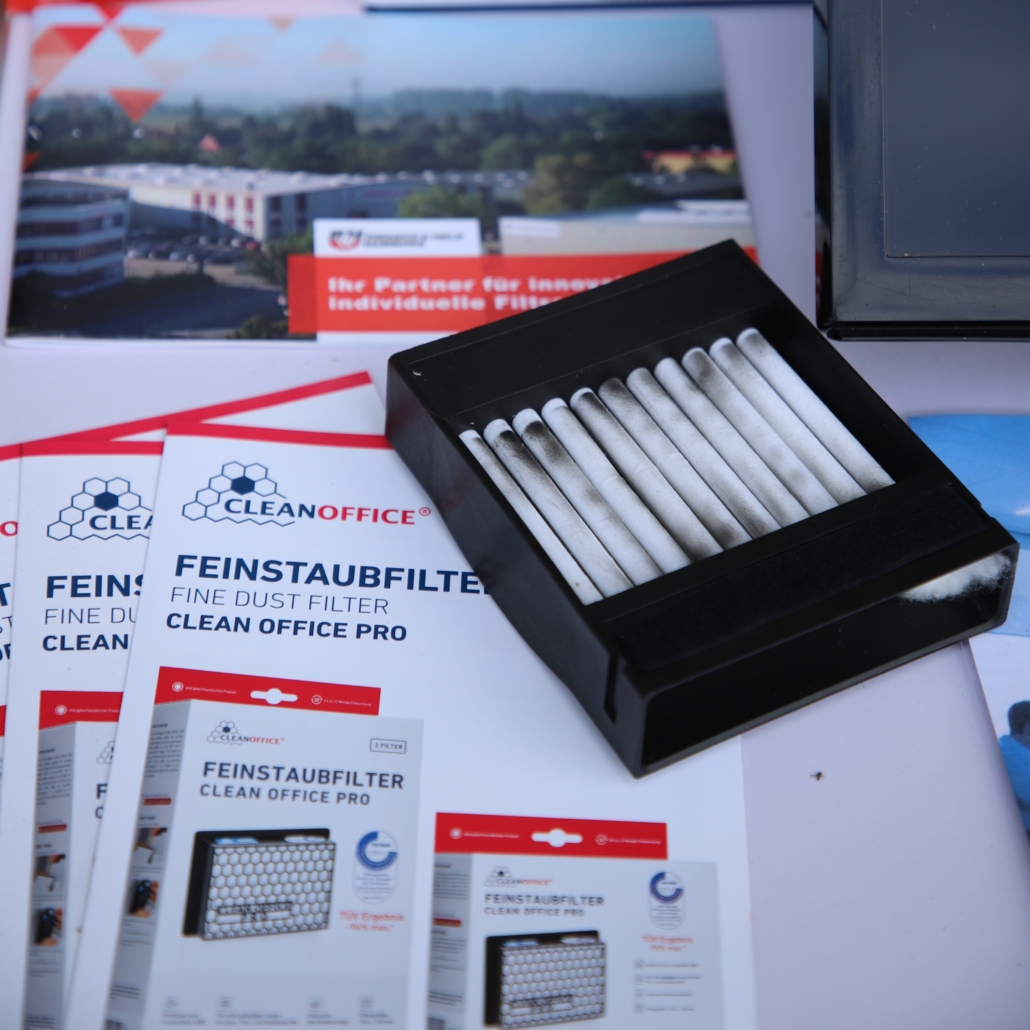
However, specific high-emission devices—such as laser printers—require stricter measures. Evidence supports placing them in separate, ventilated rooms with dedicated exhaust systems and mandatory retrofit filtration at the device level.
Intelligent and Adaptive Systemse next step is combining filtration with smart sensing and AI-driven control. These hybrid systems continuously adapt to changing conditions:
• Cooking events trigger particle spikes
• Seasonal changes increase pollen loads
Predictive filtration goes further by learning patterns over time. Systems anticipate pollution events and adjust proactively, improving both air quality and energy efficiency.
Toward an “Atmospheric Memory”
Future-ready buildings will not only monitor air quality but also maintain a continuous record—an “atmospheric memory.” This data foundation enables long-term evaluation, system optimization, and the development of better standards for indoor environments.
Air pollution is a silent epidemic,
and PM0.1 is perhaps the quietest
of all pollutants (Schraufnagel 2020)
nano-Control, International Foundation
Call for Clear Standards for Ultrafine Particles (PM0.1)
Despite growing evidence, indoor air remains underregulated. Thousands of reported cases of affected people by laser printer emissions highlight gaps in monitoring and enforcement. Sensitive individuals often detect pollutants—such as ultrafine particles from laser printers—before systems do, acting as canaries in the coal mine – early warning signals.
To protect public health, we need mandatory measurement, transparent reporting, and enforceable filtration standards. Clean indoor air is achievable—but only if filtration is treated not as an option, but as infrastructure.
Autor:
Heike Krüger, Chairwoman
nano-Control, International Foundation

Hinterlasse einen Kommentar
An der Diskussion beteiligen?Hinterlasse uns deinen Kommentar!